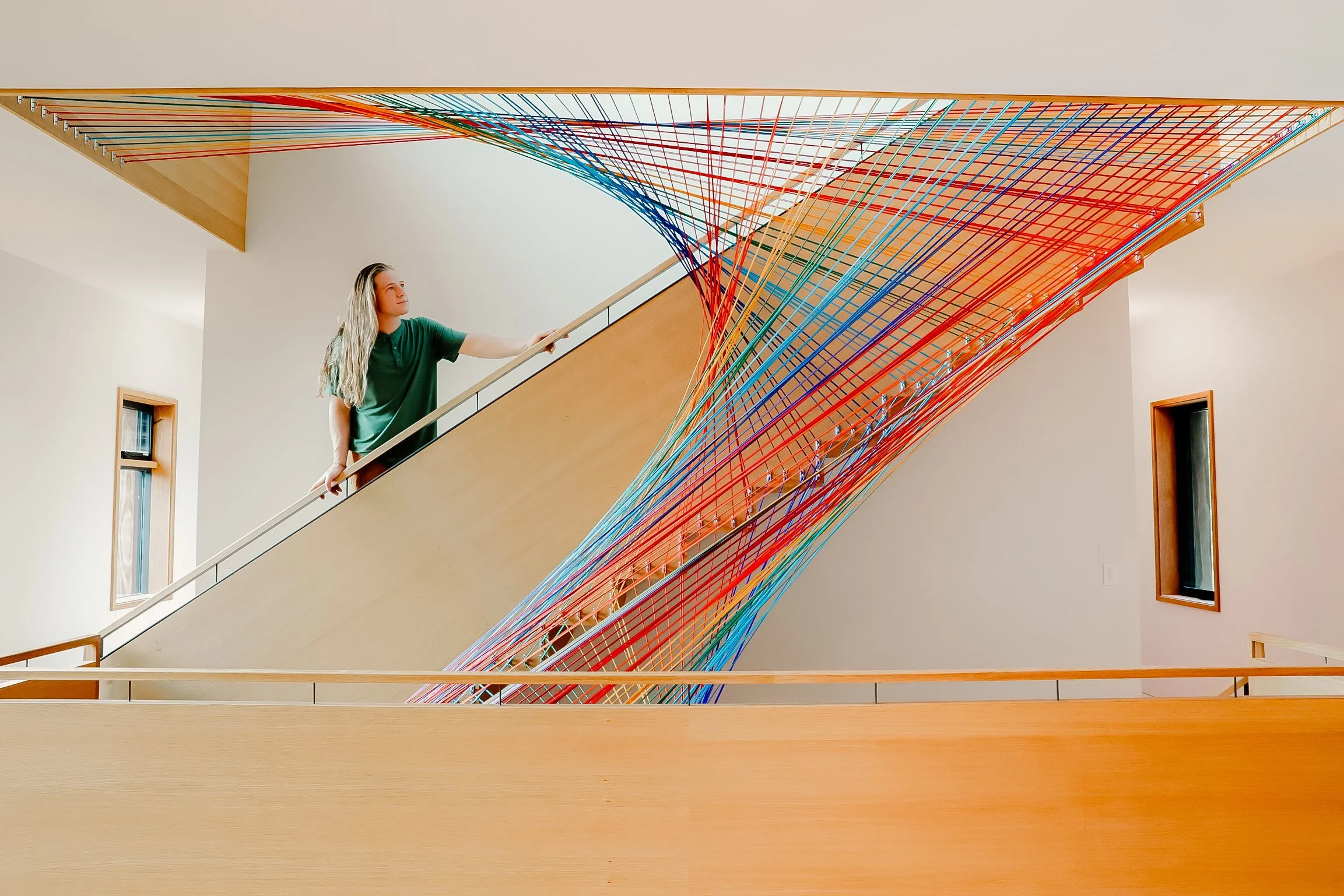
How We Did It: The Rainbow Tornado”
Some projects start with a technical problem. This one started with a design opportunity.
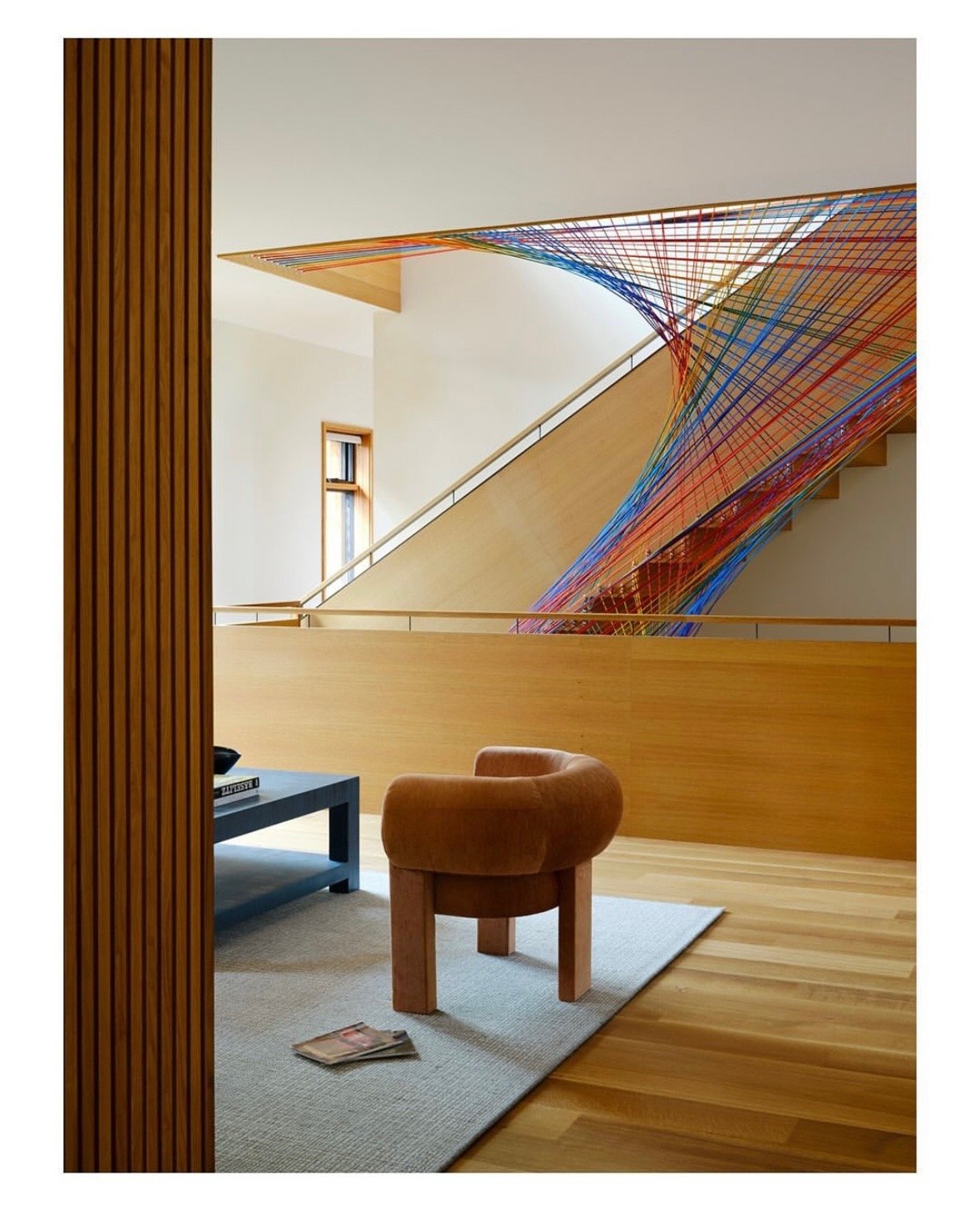
At the center of this Washington, D.C. home is a wide, open stairwell—an architectural feature designed to pull sunlight deep into the interior and visually connect three levels of living space. The homeowners, a highly design-minded family of six, loved the openness. They also understood what it meant to live with four young children in a house built around vertical movement.
They weren’t interested in hiding the stair behind heavier railings or compromising the light and openness that made the space special. They wanted a solution that would protect their family and elevate the architecture—something functional, expressive, and unmistakably intentional.
From the very beginning, this was meant to be an art piece.
When Safety Becomes a Design Question
The stair railing met all required safety standards, but the scale and openness of the space created a different kind of concern—one rooted in perception and experience. Wide, open stairs can feel precarious, even when they’re technically safe.
Rather than treating that feeling as something to suppress, the design team saw it as something to address through form.
The idea of a net emerged—not as a traditional treenet or a play structure, but as a sculptural intervention that could soften the experience of the stairwell, create visual continuity, and offer reassurance without enclosing the space.
A Collaborative Approach
By the time Treenet Collective joined the project, it was clear that this wouldn’t be a climbable net. Instead, we were invited to work alongside Cedar Architecture and the homeowners to create a piece that would live within the stairwell as both art and architecture.
The brief was simple and complex all at once:
Create something bold, beautiful, and dynamic—while quietly doing the work of a safety net.
Designing the Rainbow Tornado
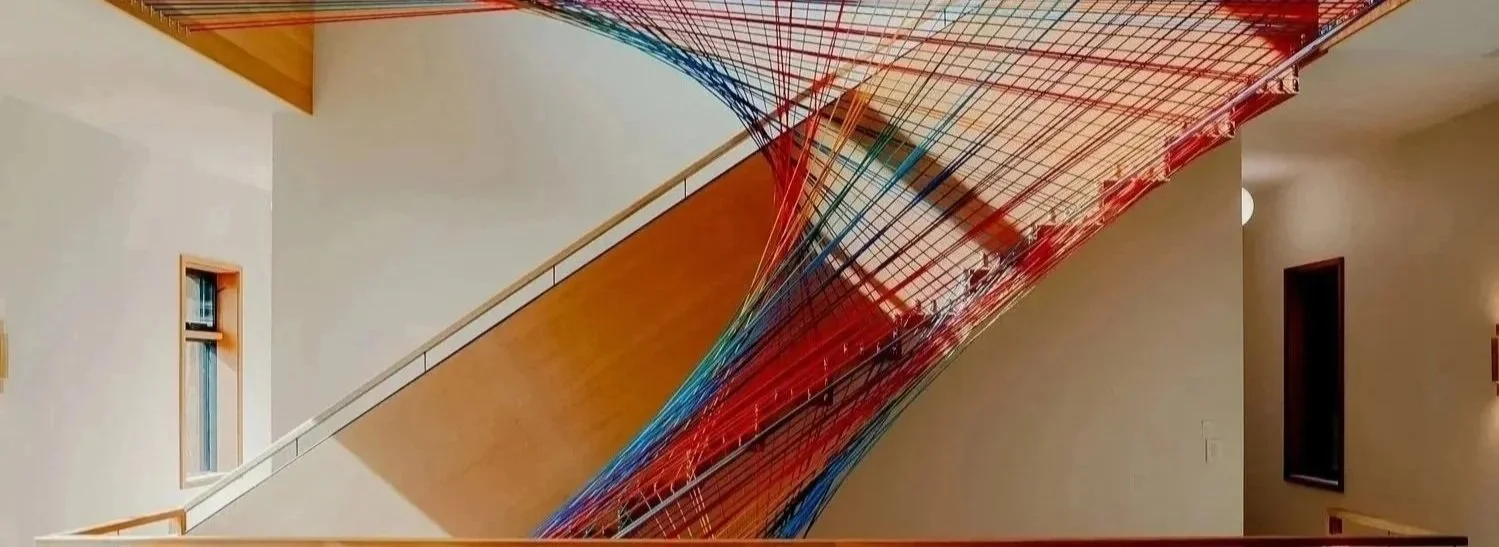
What emerged was The Rainbow Tornado: a vertical, swirling net sculpture that responds directly to the geometry of the stairwell. The piece moves through the space like a drawing pulled into three dimensions—light, energetic, and constantly changing as you move past it.
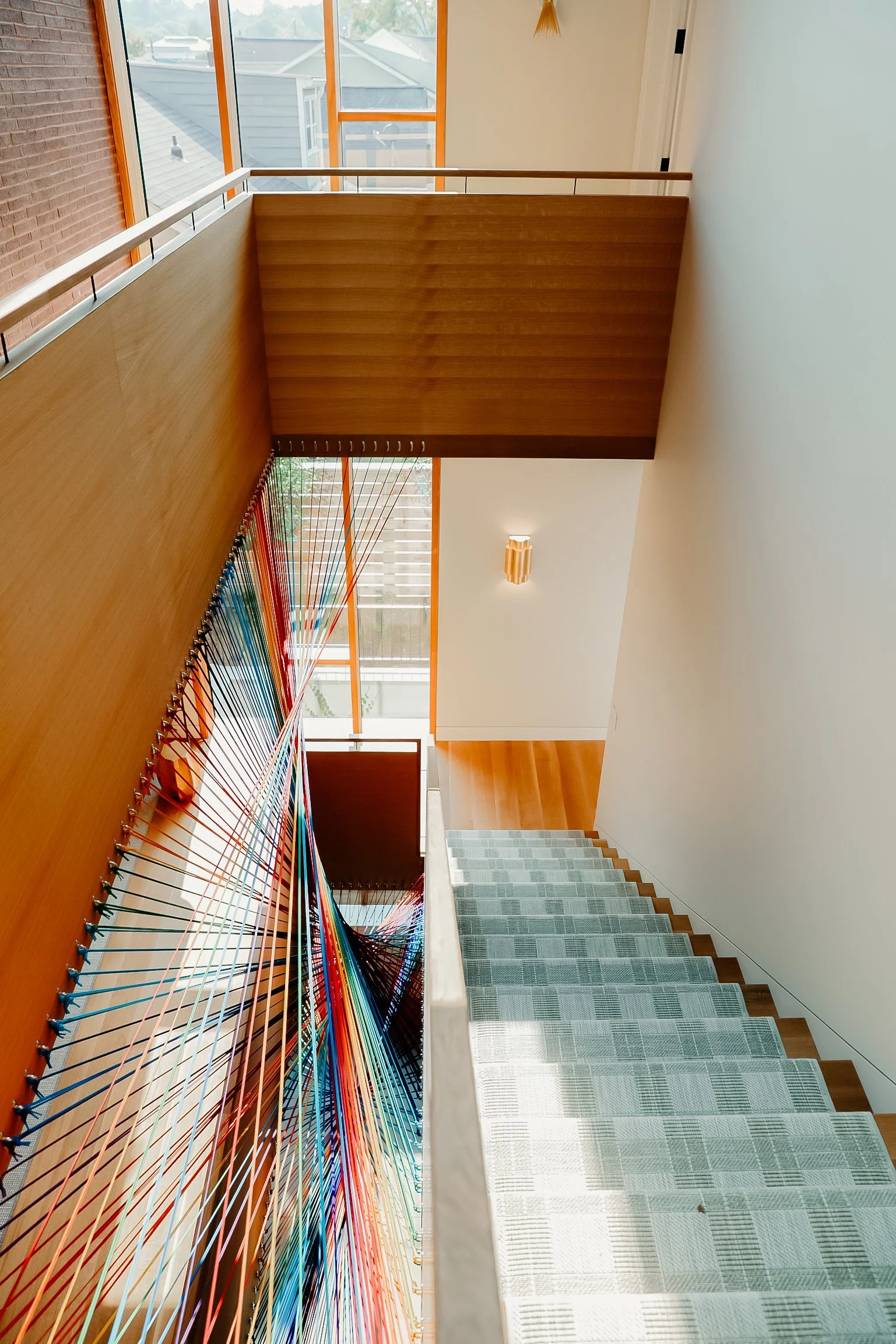
Constructed from a thinner version of the paracord typically used in rock climbing, the structure spans approximately 11 feet from the first floor to the second, within a stairwell that rises more than 16 feet in total. Anchor points were placed roughly 2½ inches apart, creating a compact weave that ensures very little can pass through, while still allowing the piece to feel open and breathable.
The spacing varies intentionally, giving the form depth and motion rather than reading as a flat surface or barrier.
Installation in Motion
We worked in the home for about a week and a half, translating the design into something physical and responsive to the space. Color played a central role—not as decoration, but as movement. The sweeping lines guide the eye upward, easing the visual tension of the stair and turning a moment of transition into an experience.
The result is sculptural and expressive, but never heavy. The net holds the space without closing it off.